Nursing prerequisites: the courses ABSN programs require
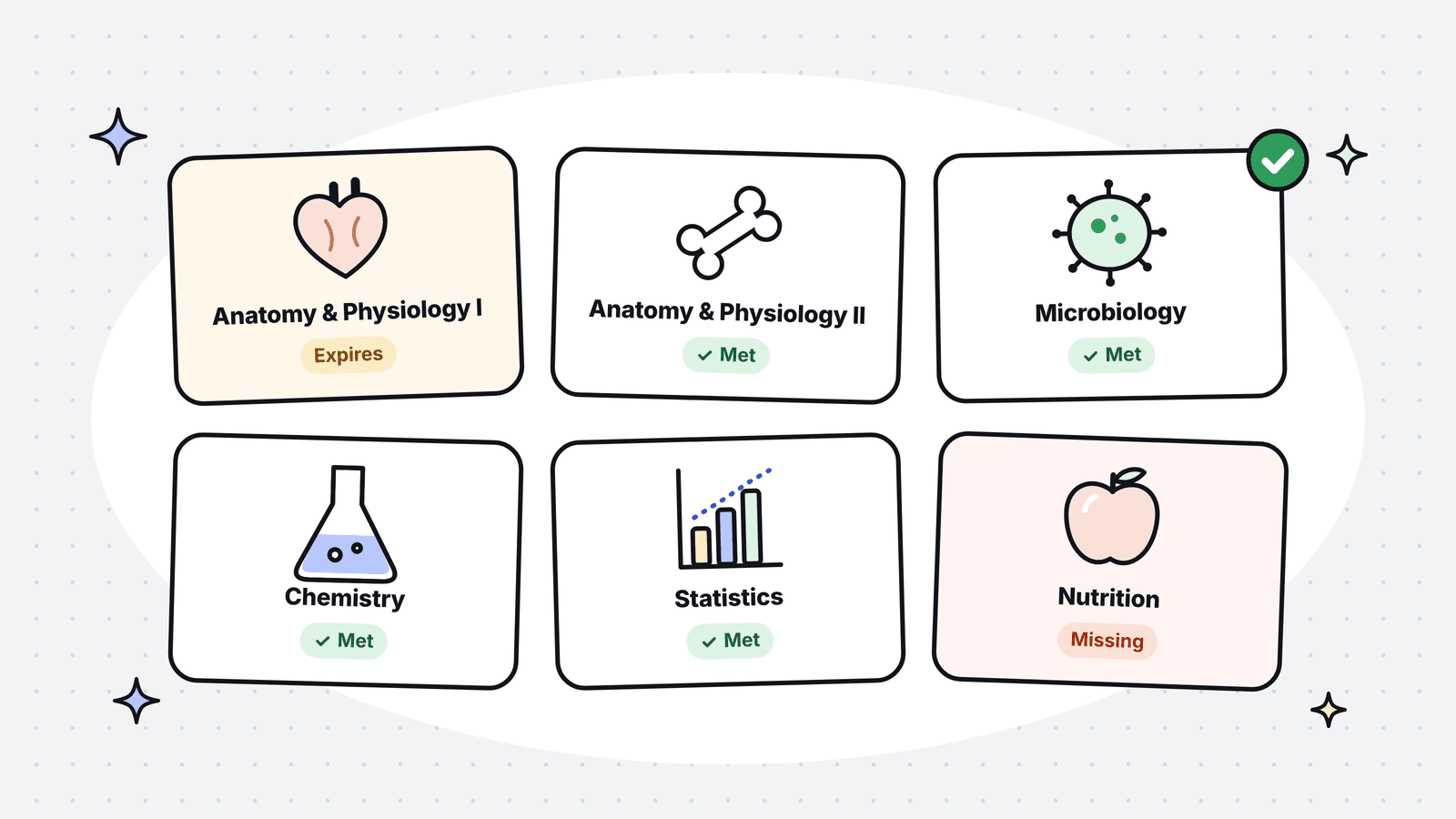
Most Accelerated Bachelor of Science in Nursing (ABSN) programs require about seven prerequisite courses, usually drawn from Anatomy & Physiology I and II, Microbiology, Chemistry, Statistics, Human Growth & Development, Nutrition, and General Psychology. Each school sets its own list, minimum grades, and time limits, so the same course can count at one program and not at another.
That last part is what makes nursing prerequisites confusing. This guide covers the courses you're most likely to need, the fine print that trips people up, and how to tell whether the courses you've already taken still count.
What prerequisites do you need for nursing school?
These are the nursing prerequisites you'll see most often at ABSN programs:
| Course | Usually includes a lab? | Notes |
|---|---|---|
| Anatomy & Physiology I | Yes | Required almost everywhere, and often the first course schools check |
| Anatomy & Physiology II | Yes | Some schools accept separate Anatomy and Physiology courses instead |
| Microbiology | Yes | Typically requires a lab section |
| Chemistry | Often | General, inorganic, organic, or "chemistry for health professions," depending on the school |
| Statistics | No | Usually any college-level statistics course |
| Human Growth & Development | No | Also called Lifespan or Developmental Psychology |
| Nutrition | No | Required by many programs, not all |
| General Psychology | No | Sometimes replaced by Sociology or Anthropology |
Some programs add others, such as General Biology, Sociology, or an English course. Your first bachelor's degree usually covers the general education requirements, so the list above is mostly science and health courses.
How many prerequisites do you need?
Among the programs we track that publish a course list, the typical program requires seven courses, and most ask for between six and nine. How many of those you still need depends on your first degree. A biology graduate may need one or two, while someone with a business or English degree may need all of them.
The fine print: grades, time limits, and labs
Knowing the course list is the easy part. Whether a course counts comes down to rules most applicants don't see until they're deep into an application.
Minimum grades
Most programs set a minimum grade for each prerequisite, and science courses often have a higher bar. UNC-Chapel Hill requires a B- or better in Anatomy & Physiology and Microbiology but a C in Psychology and Statistics. Cal State Fullerton requires a B or better in each science prerequisite. Tulane requires at least a C in each prerequisite and a 3.0 grade point average (GPA) across all seven of them.
Do nursing prerequisites expire?
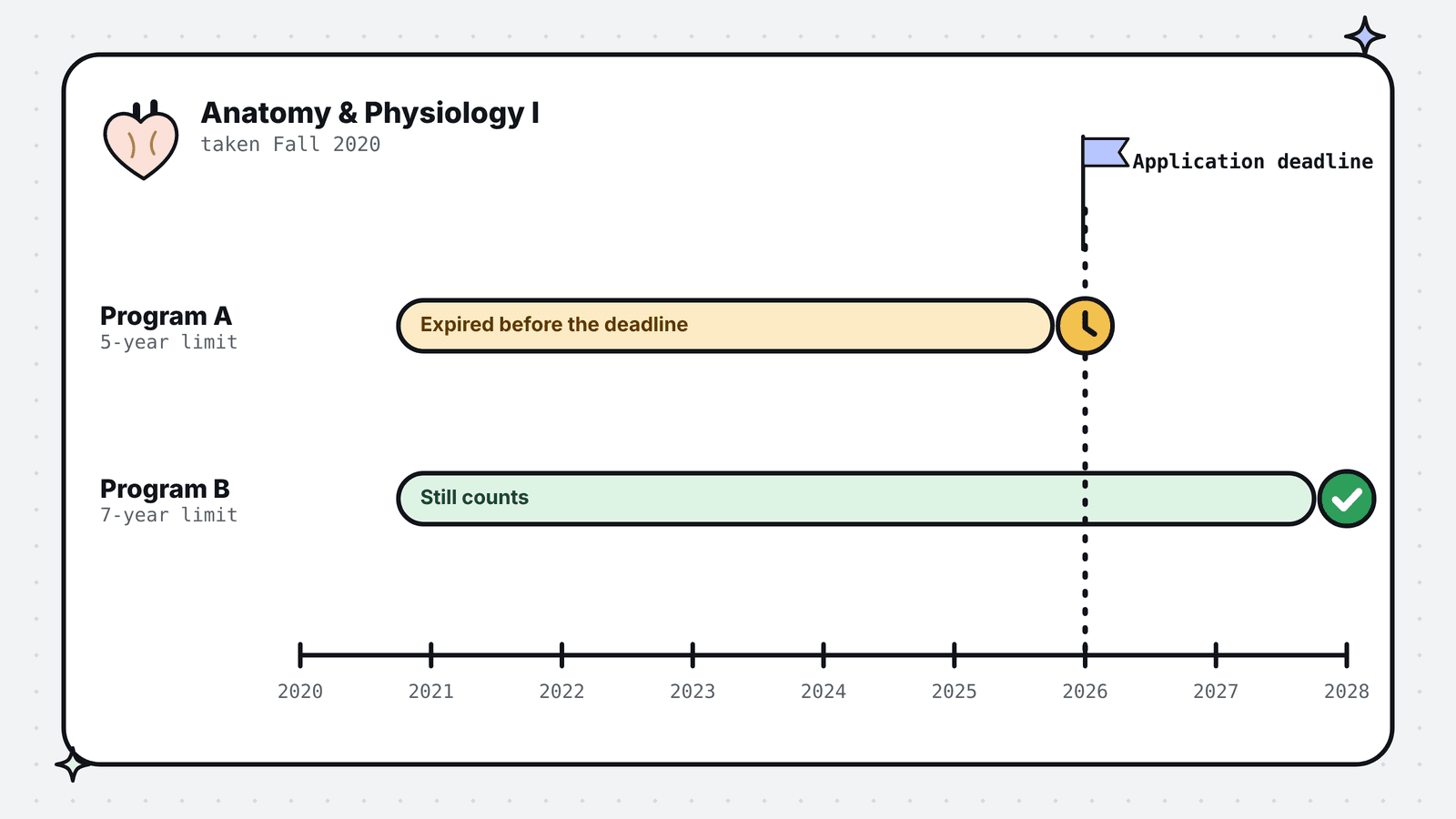
Often, yes. Many programs only accept science courses taken within a certain number of years, and the details vary:
| Program | Time limit on science prerequisites | Counted from |
|---|---|---|
| UNC-Chapel Hill | 5 years (10 for Psychology and Statistics) | Application deadline |
| Cal State Fullerton | 5 years | Application cycle (Fall 2027 applicants: completed in 2022 to 2026) |
| UMKC | 5 years | Not stated on the page |
| Tulane | 10 years | Application |
| Bushnell University | 7 years (10 for Nutrition and Human Growth & Development) | Intended program start year |
Rules as published on each school's site in November 2026. Always confirm on the school's own page.
Two details matter here. First, the limit itself. Among the programs we track that publish one, 10 years, 5 years, and 7 years are the most common, in that order. Second, the date it counts from. A course that's 4 years and 11 months old today might still expire before a program's deadline or start date. That's the most common surprise for career changers whose science courses are a few years old.
Not every program has a time limit. See which programs say their prerequisites don't expire and which set a time limit on science courses.
Labs, online courses, and retakes
- Labs: Most programs require lab sections for Anatomy & Physiology, Microbiology, and often Chemistry. Check the credit hours too, since some schools set a minimum.
- Online labs: Policies vary. Cal State Fullerton accepts online formats for all prerequisites, including labs, while many schools don't state a policy at all. If your target programs don't say, ask before you enroll. Our list of online lab policies shows the programs that publish one.
- Retakes: Cal State Fullerton puts no limit on repeats, Tulane allows one repeat per prerequisite, and UNC-Chapel Hill counts every graded attempt in its science GPA. A retake can help a lot at one school and very little at another.
Can you take nursing prerequisites online?
Often, yes, as long as the course comes from an accredited school and your target programs accept it. Community colleges are usually the most affordable option and offer many prerequisites online. Some students use online course providers such as Portage Learning or StraighterLine, but acceptance varies by school. Bushnell University, for example, takes courses completed online but not courses from StraighterLine or Sophia Learning, because they don't come from a regionally accredited institution.
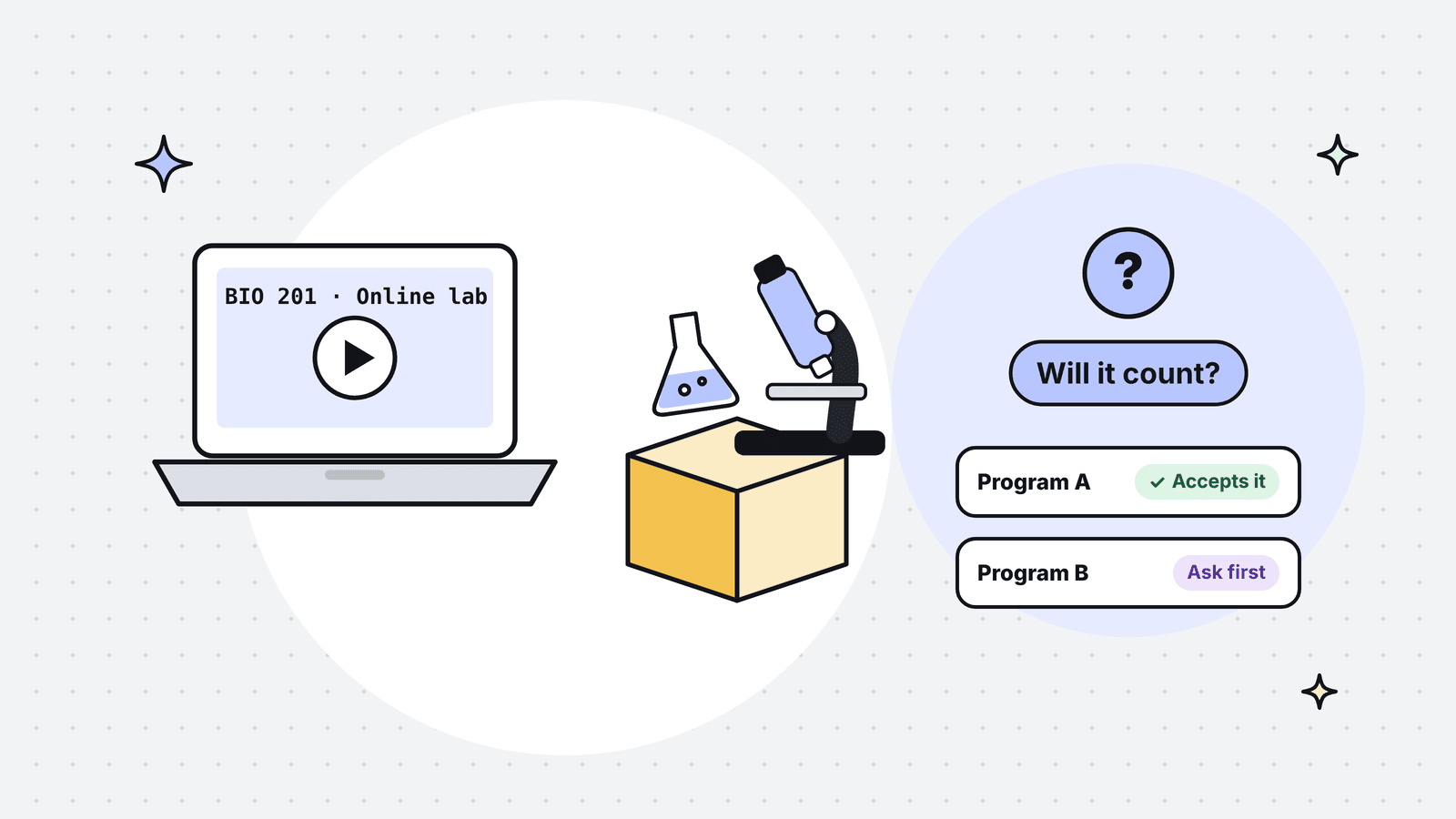
Before you pay for any course, confirm three things with each program on your list: that it accepts the provider, that it accepts the course format (especially online labs), and that the course will still be within its time limit when you apply.
How long do nursing prerequisites take?
A single prerequisite usually takes one semester, around 15 to 16 weeks, at a college. Self-paced online courses can move faster. If you need several courses, plan for two to three semesters, because some must be taken in order: Anatomy & Physiology I comes before II, and some schools want Chemistry before Microbiology.
Many programs let you apply with a course or two still in progress. UNC-Chapel Hill, for example, requires Anatomy & Physiology I to be done by the application deadline but lets ABSN applicants finish Anatomy & Physiology II by the end of the fall semester before the program starts. Rules like that can shave months off your timeline.
Are there accelerated nursing programs without prerequisites?
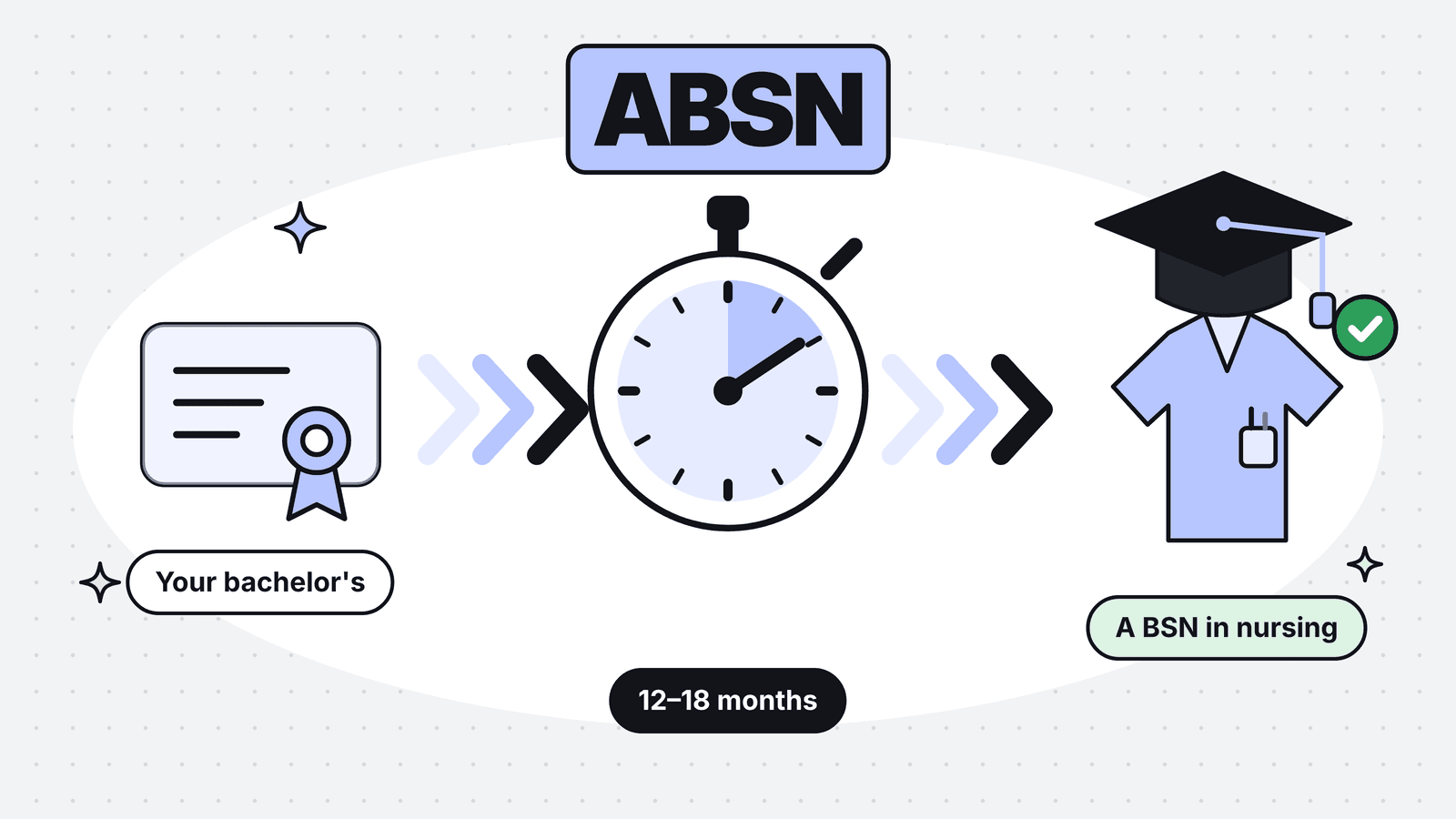
It's rare to find an ABSN program with no prerequisites at all. Accelerated programs compress a full nursing curriculum into 12 to 18 months, so they rely on students arriving with the science foundation already done.
What you will find are programs that require fewer prerequisites, accept courses in progress, or help you plan when to complete them. That flexibility can matter as much as the list itself.
How to check if your prerequisites count
Here's the problem: there are more than 300 ABSN programs in the U.S., each with its own course list, grade minimums, time limits, and lab rules. Checking your courses against them one admissions page at a time can take weeks.
ABSNcheck does the comparison for you. Enter your courses and see which published minimums you've met, what's missing, and what's about to expire, each result linked to the page the requirement came from. It's free for your first three programs. A paid pass adds transcript upload and the check across every program we track.
New to accelerated programs? Start with What is an ABSN program? or our guide to nursing as a second career.
Frequently asked questions
What are the prerequisites for nursing school?
Most ABSN programs require Anatomy & Physiology I and II, Microbiology, Chemistry, Statistics, Human Growth & Development, and Nutrition, often with General Psychology. The exact list varies by school.
Do nursing prerequisites expire?
At many programs, yes. Science prerequisites often must be taken within 5, 7, or 10 years, counted from the application, the application deadline, or the program start date. Some programs have no time limit.
What grade do you need in nursing prerequisites?
Usually a C or better, and often a B- or B in science courses. Many programs also set a minimum GPA across all of your prerequisites.
Can you take nursing prerequisites at a community college?
Yes. Community college courses are widely accepted and are often the most affordable way to complete prerequisites, as long as the college is accredited and the course meets each program's requirements.
Can you apply to nursing school before finishing prerequisites?
Often, yes. Many programs let you apply with one or two courses in progress, as long as you finish them by a set date before the program starts.