Nursing as a second career: how to make the switch
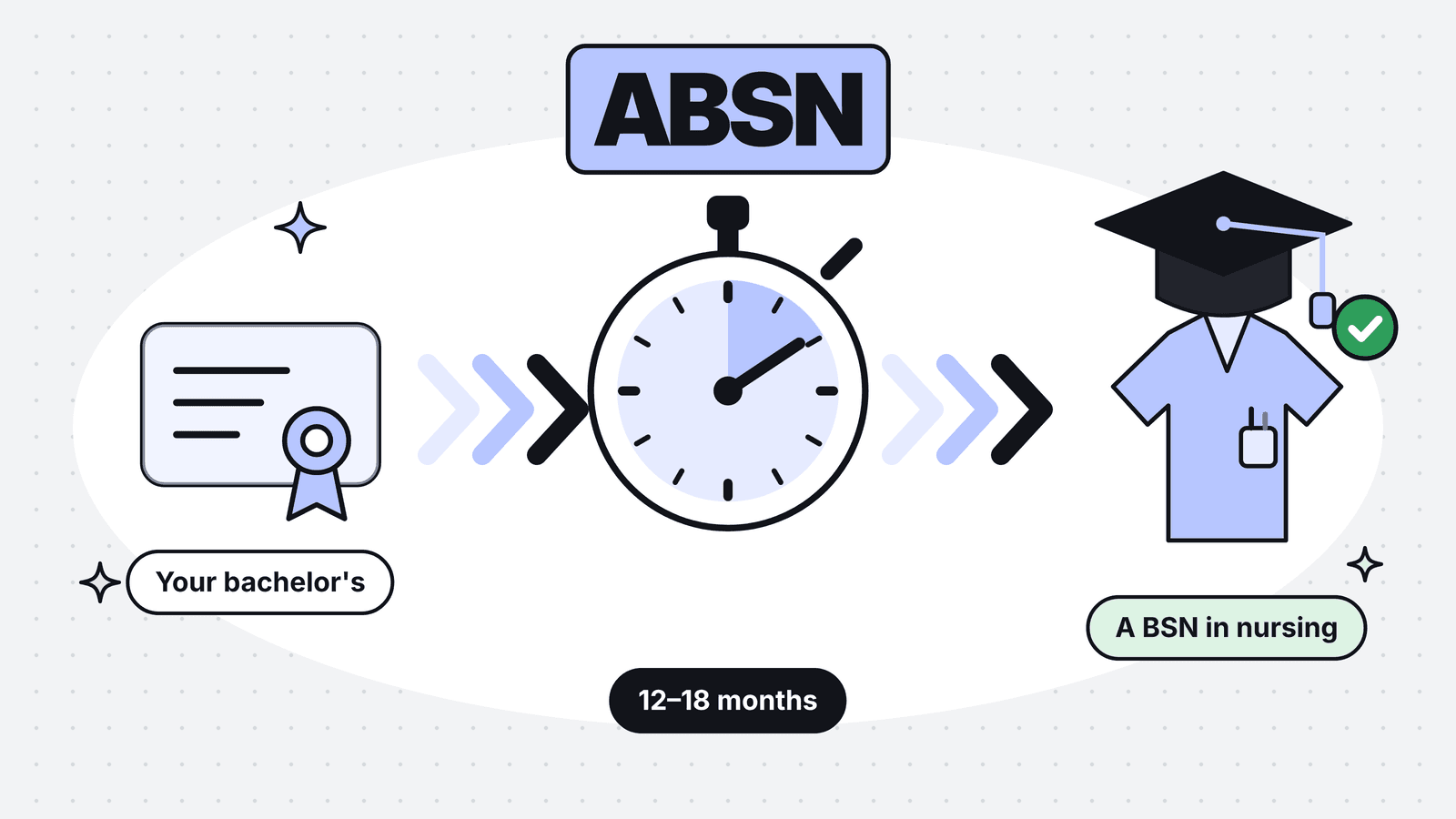
If you already have a bachelor's degree in another field, the fastest way to become a registered nurse (RN) is an accelerated Bachelor of Science in Nursing (ABSN). It takes 12 to 18 months of full-time study once your prerequisites are done, and you finish eligible for the same licensing exam as graduates of four-year nursing programs.
This article walks through the paths into nursing as a second career, how long each one takes, and the steps to get started.
Is it too late to become a nurse?
No. Career changers are common in nursing, and nursing schools have built entire programs around them.
The American Association of Colleges of Nursing (AACN) describes the typical second-degree nursing student as "motivated, older," with higher academic expectations than traditional students. Employers notice too: according to AACN, they report that these graduates "are more mature, possess strong clinical skills, and are quick studies on the job."
Your previous career isn't wasted time. Communication skills, composure under pressure, and experience working on a team all carry straight into nursing.
The fastest route: second-degree nursing programs
ABSN programs, also called second-degree nursing programs, give you credit for the general education you've already completed, so you only take nursing coursework. According to AACN:
- ABSN programs take 12 to 18 months to complete, a range AACN says includes prerequisites. Most programs want them finished before you start, so add time for any you still need.
- There were 340 accelerated bachelor's programs in the U.S. in 2025.
- They're designed for adults who already hold a bachelor's or graduate degree in a non-nursing field.
When you finish, you earn a Bachelor of Science in Nursing (BSN) and take the same national licensing exam as traditional BSN and associate degree graduates: the National Council Licensure Examination for Registered Nurses (NCLEX-RN).
New to the term? Read our full guide: What is an ABSN program?
Your options at a glance
ABSNs aren't the only way in. Here's how the main paths compare for someone who already has a degree:
| Path | Typical length | Best for |
|---|---|---|
| Accelerated BSN (ABSN) | 12–18 months | Career changers who can study full time |
| Associate degree in nursing (ADN) | About 2–4 years | People who need a lower-cost or part-time path |
| Direct-entry Master of Science in Nursing (MSN) | About 2–3 years | People who want a graduate degree from the start |
| Traditional BSN | About 4 years | People without a prior bachelor's degree |
AACN counted 104 accelerated or entry-level master's programs in 2025, so direct-entry MSNs are a real option, just a less common one.
For career changers who can study full time, the ABSN is the quickest of these paths. Many hospitals also prefer or require a BSN, which an ABSN gives you.
How to change careers to nursing in 5 steps
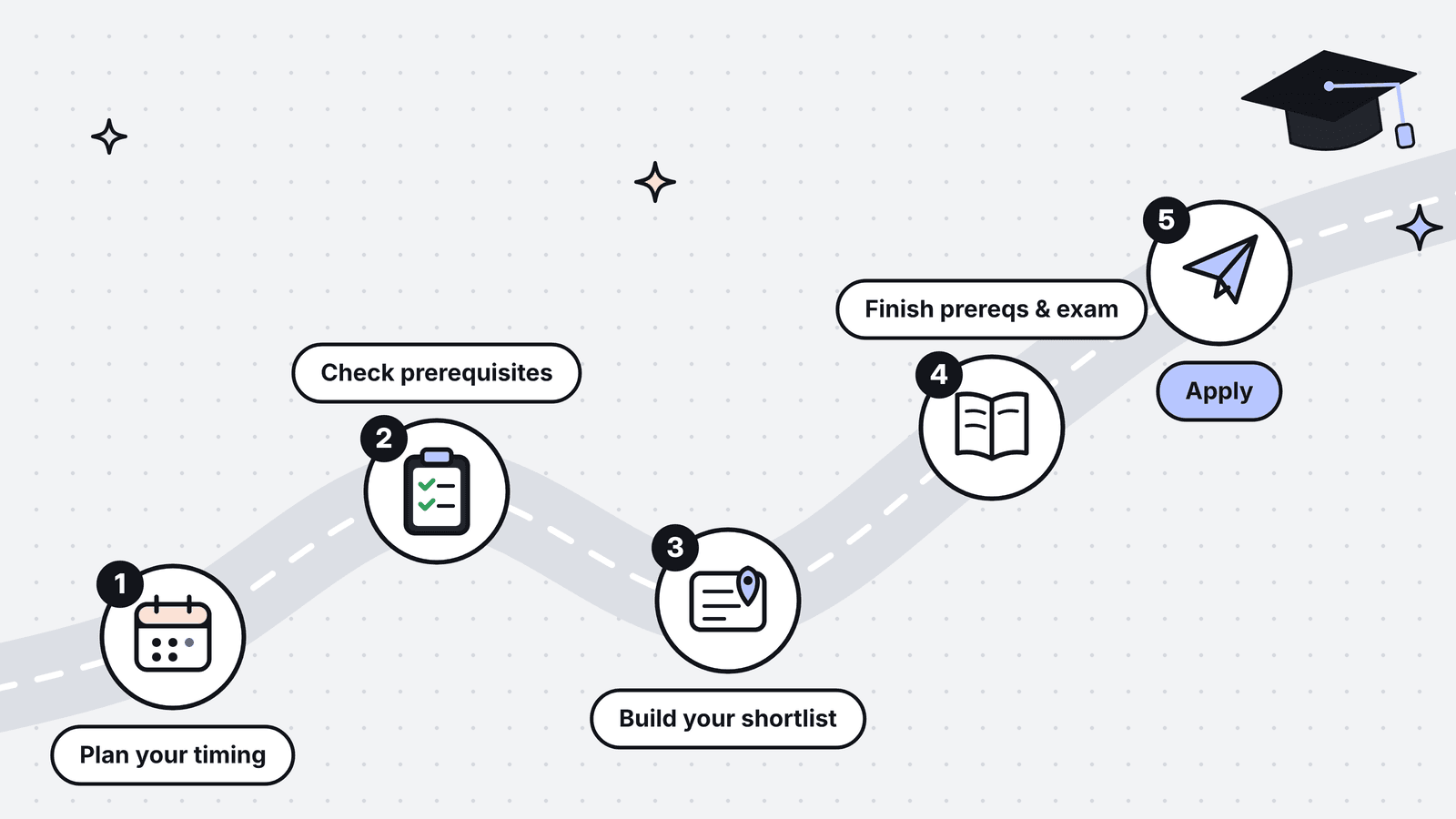
1. Make sure the timing works for your life
ABSN programs are intense. Classes run full time with few or no breaks, and you complete the same clinical hours as a traditional program in a fraction of the time. AACN notes that students are encouraged not to work while enrolled.
Before you apply, plan for 12 to 18 months with little or no income. Many career changers save ahead of time, use federal student loans, or look for hospital tuition programs.
2. Find out which prerequisites you still need
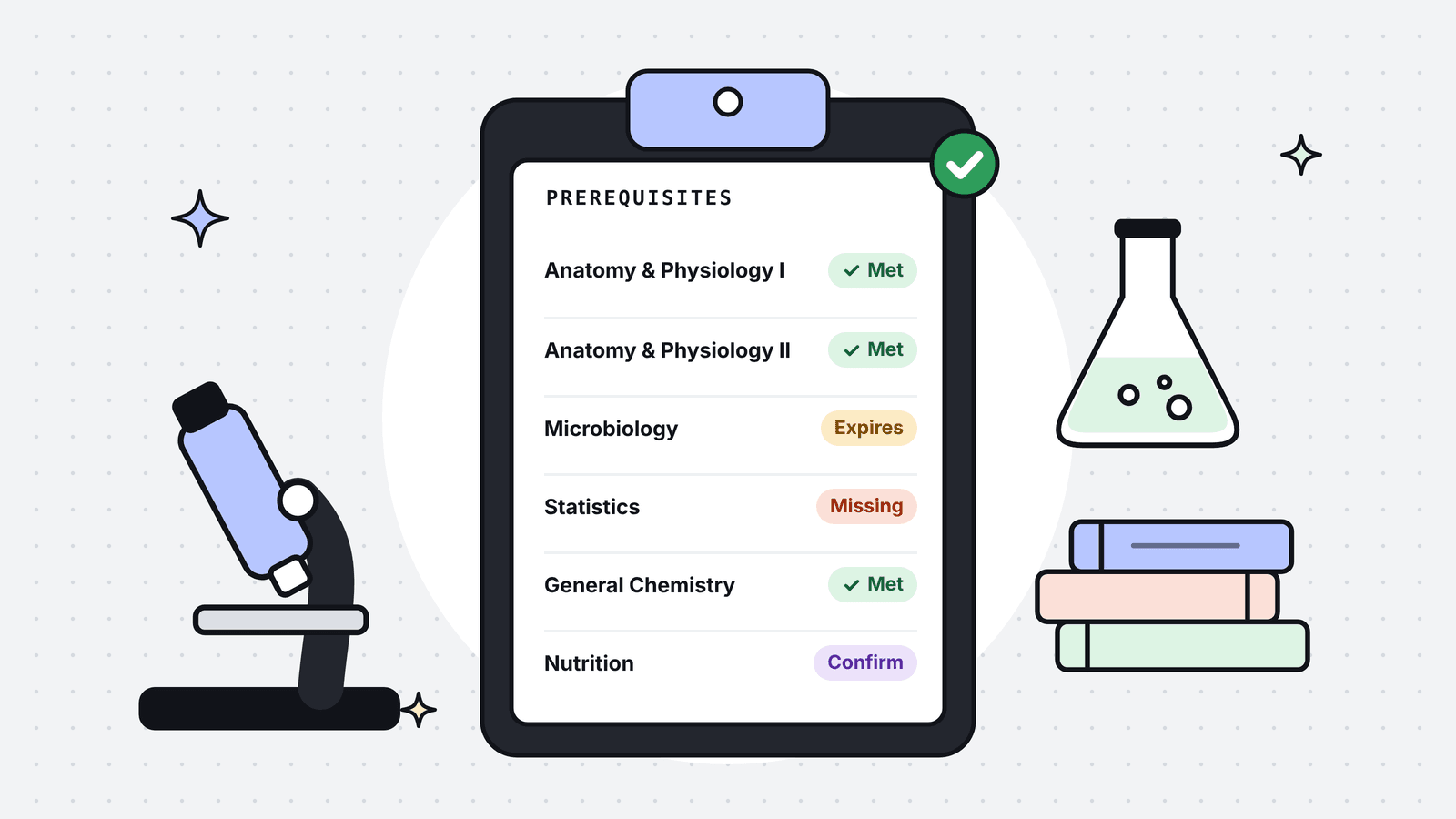
Each ABSN program sets its own prerequisite courses, and the details differ from school to school. Common prerequisites include:
- Anatomy & Physiology I and II
- Microbiology
- General Chemistry
- Statistics
- Human Growth & Development (Lifespan)
- Nutrition
The details are what trip people up. One program may require a B- or better, another a C+. One may accept science courses from any year, while another only counts courses taken within the last five or seven years. A course you took a decade ago might count at one school and not at another.
This is what ABSNcheck was built for. Enter your courses (or upload your transcript with a paid pass) and see which requirements you meet, what's missing, and what's about to expire at each program you check, instead of reading hundreds of admissions pages one at a time.

3. Build your shortlist
Once you know where you stand, narrow your list by:
- Location and format. Some programs offer online coursework with in-person labs and clinicals; others are fully on campus.
- Start dates. Many ABSNs start more than once a year, which can shorten your wait.
- Cost. Tuition varies widely, especially between public and private schools.
- NCLEX pass rates. Most state boards of nursing publish them, and a program's first-time pass rates over several years (not just one) are a good signal of its quality.
Browse the programs we track to compare requirements side by side.
4. Finish your prerequisites and entrance exam
Take any missing courses at a community college or an accredited online provider, but confirm first that your target programs will accept them, especially online labs. Many programs also require an entrance exam such as the Test of Essential Academic Skills (TEAS) or the HESI Admission Assessment (HESI A2), so check what each school on your list wants.
5. Apply
ABSN programs are competitive, and many expect at least a 3.0 grade point average (GPA). Apply to several programs, watch each deadline closely, and keep your prerequisite grades as strong as you can, since some schools weigh them more heavily than your overall GPA.
Changing careers to nursing at 30, 40, or 50
Age matters far less than readiness. People enter ABSN programs in their 30s, 40s, and beyond. If you're changing careers to nursing later in life, the main questions are practical ones:
- Can you set aside 12 to 18 months for full-time study?
- Are your science courses recent enough? Science courses from your first degree may be older than some programs allow.
- Does the work fit you physically? Many nurses work 12-hour shifts on their feet, though there are also less physically demanding specialties.
Is nursing a good second career?
By the numbers, demand for registered nurses is strong and steady. According to the U.S. Bureau of Labor Statistics:
- Registered nurses earned a median salary of $97,550 in May 2025.
- RN jobs are projected to grow 6% from 2025 to 2035, faster than average.
- About 180,800 RN openings are projected each year.
Frequently asked questions
Can I become a nurse if my first degree isn't in science?
Yes. ABSN programs accept bachelor's degrees in any field. You'll just need to complete the science prerequisites before you start.
How long does it take to become a nurse as a career changer?
With a bachelor's degree, an ABSN takes 12 to 18 months, plus however long you need for any missing prerequisites. An associate degree typically takes 2 to 4 years, and a direct-entry master's about 2 to 3 years.
Can I keep working while I change careers to nursing?
You can usually work while taking prerequisites. During an ABSN itself, most programs strongly discourage it because of the full-time pace.
Do I need a second bachelor's degree to become a nurse?
Not necessarily. An associate degree or a direct-entry master's can also lead to a registered nurse license. An ABSN does give you a second bachelor's degree, a BSN, but you don't have to start over: your first degree covers the general education, so you only complete the nursing coursework.
Find out where you stand
Check your courses against each program's published minimums and see your results in minutes. It's free for your first three programs.